
Predicting future revenue streams can transform your business strategy. Mastering income forecasting through logarithmic techniques provides clarity in an uncertain financial landscape.

Financial forecasting has evolved from simple guesswork to sophisticated analytical methods. Today’s business leaders need reliable tools to anticipate revenue trends, manage resources effectively, and make confident strategic decisions. Logarithmic analysis offers a powerful yet accessible approach to understanding how your income will evolve over time, revealing patterns that linear methods often miss.
🔍 Understanding the Power of Logarithmic Analysis in Financial Forecasting
Logarithmic techniques have revolutionized how we approach income forecasting by transforming exponential growth patterns into linear relationships. This mathematical transformation makes complex revenue trends easier to analyze and predict with remarkable accuracy.
When businesses experience exponential growth or decline, traditional linear forecasting methods fail to capture the true trajectory. Logarithmic scales compress large ranges of data, allowing you to visualize decades of financial information on a single chart without losing critical details in the early stages.
The beauty of logarithmic forecasting lies in its simplicity. By applying natural logarithm (ln) or base-10 logarithm (log10) transformations to your income data, you convert multiplicative relationships into additive ones. This conversion enables you to apply straightforward linear regression techniques to data that would otherwise require complex exponential modeling.
Why Traditional Forecasting Methods Fall Short
Conventional forecasting approaches often assume linear growth patterns, which rarely reflect real-world business dynamics. Markets expand through network effects, compound interest influences investment returns, and customer acquisition follows exponential curves during growth phases.
Linear models systematically underestimate growth during expansion periods and overestimate income during contraction phases. This misalignment leads to poor resource allocation, missed opportunities, and strategic missteps that could have been avoided with logarithmic analysis.
📊 The Mathematics Behind Log-Based Income Prediction
Understanding the mathematical foundation of logarithmic forecasting doesn’t require advanced degrees in mathematics. The core principle involves transforming your income data using logarithmic functions before applying regression analysis.
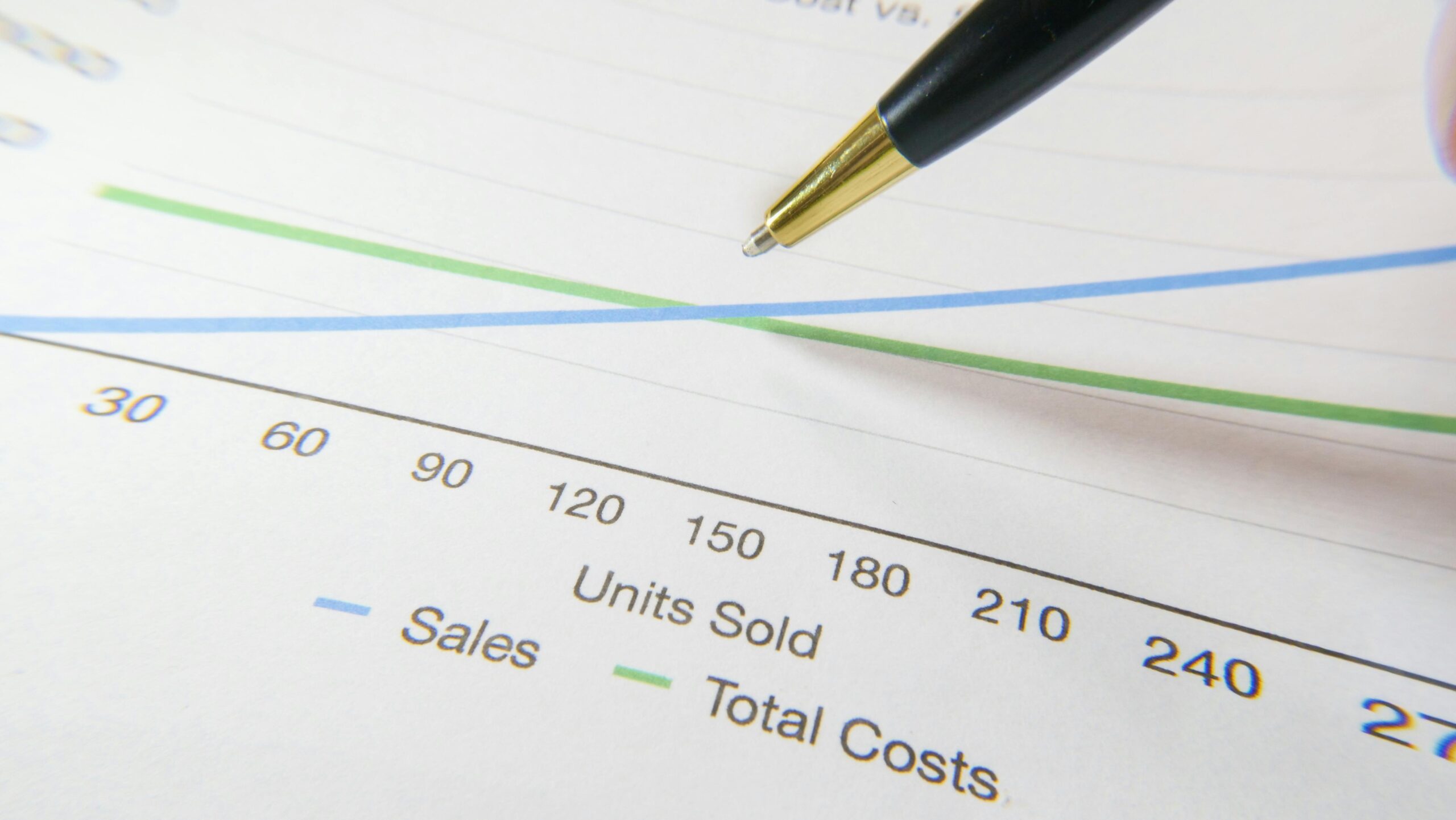
When you plot income against time on a logarithmic scale, exponential growth appears as a straight line. The slope of this line represents your growth rate, while deviations from the line indicate periods of acceleration or deceleration in your income trajectory.
The standard logarithmic forecasting formula takes the form: ln(Income) = a + b × Time, where ‘a’ represents your starting point and ‘b’ indicates your growth rate. After performing regression analysis on the transformed data, you can reverse the logarithm to obtain actual income predictions.
Practical Application of Log Transformations
Begin by collecting your historical income data in consistent time intervals—monthly, quarterly, or annually. Apply the natural logarithm to each income value, creating a transformed dataset. Plot these transformed values against time, and you’ll likely observe a more linear relationship than in the original data.
Calculate the linear regression coefficients using standard statistical methods or spreadsheet software. These coefficients become your forecasting engine, enabling you to project future income by selecting future time points, calculating predicted log values, and exponentiating back to actual currency amounts.
💡 Implementing Simple Log Techniques for Your Business
Implementing logarithmic forecasting doesn’t require expensive software or specialized expertise. Common spreadsheet applications provide all the necessary functions to transform your data and generate reliable predictions.
Start by organizing your historical income data in two columns: one for time periods and another for corresponding income amounts. Create a third column applying the LN() function to your income values. Use the built-in regression or trend functions to calculate your forecasting parameters.
Step-by-Step Forecasting Workflow
Your forecasting workflow should follow a systematic approach to ensure consistency and accuracy:
- Collect at least 12-24 data points of historical income information
- Clean your data by removing outliers and correcting obvious errors
- Apply logarithmic transformation to income values
- Create a scatter plot of transformed data versus time
- Calculate linear regression coefficients
- Generate future predictions using the derived formula
- Convert predictions back to actual currency amounts
- Establish confidence intervals around your forecasts
This structured methodology ensures reproducibility and allows you to refine your approach as you gather more data over time. Documentation of each step facilitates communication with stakeholders who need to understand your forecasting rationale.
📈 Identifying Growth Patterns and Trend Reversals
One of the most valuable aspects of logarithmic forecasting is its ability to reveal subtle shifts in growth patterns before they become obvious. By monitoring deviations from your logarithmic trendline, you can detect early warning signs of trend reversals or acceleration.
When actual income consistently falls below your logarithmic trend prediction, it signals slowing growth momentum. Conversely, values exceeding predictions indicate accelerating growth that may justify increased investment or expansion planning.
Recognizing Seasonal and Cyclical Components
While logarithmic analysis excels at capturing long-term growth trends, you must account for seasonal variations and business cycles. Decompose your income data into trend, seasonal, and residual components to create more nuanced forecasts.
Apply logarithmic transformation to the deseasonalized data to isolate the underlying growth trend. Calculate seasonal factors separately, then combine them with your log-based trend predictions to generate final forecasts that reflect both growth trajectory and recurring patterns.
🎯 Advanced Applications for Strategic Planning
Logarithmic forecasting extends beyond simple revenue prediction. Strategic planners use these techniques to model market penetration, customer lifetime value projections, and competitive positioning scenarios.
By applying log-based analysis to different revenue streams separately, you can identify which business segments show the strongest growth potential. This granular approach enables targeted resource allocation and helps prioritize strategic initiatives based on quantitative evidence rather than intuition alone.
Scenario Planning with Logarithmic Models
Create multiple forecasting scenarios by adjusting the growth rate parameter in your logarithmic model. Conservative scenarios use lower growth rates, optimistic projections use higher rates, and your base case reflects historical trends.
These scenarios become invaluable for stress-testing business plans, evaluating investment opportunities, and communicating potential outcomes to investors or board members. The mathematical rigor of logarithmic models lends credibility to your projections while acknowledging uncertainty through scenario ranges.
🛠️ Tools and Technologies for Log-Based Forecasting
Modern forecasting doesn’t require specialized statistical software. Spreadsheet applications like Microsoft Excel, Google Sheets, and LibreOffice Calc provide logarithmic functions and regression capabilities sufficient for most business forecasting needs.
For more sophisticated analysis, programming languages like Python and R offer libraries specifically designed for time series forecasting. These tools enable automation of your forecasting workflow, making it easy to update predictions as new data becomes available.
Selecting the Right Forecasting Platform
Your choice of forecasting platform should balance sophistication with usability. Small businesses and individual entrepreneurs often find spreadsheet-based solutions perfectly adequate, while larger organizations may benefit from dedicated forecasting software that integrates with existing business intelligence systems.
Consider factors such as data volume, update frequency, collaboration requirements, and visualization needs when selecting your forecasting tools. The best platform is one that you’ll actually use consistently rather than the most feature-rich option that sits unused.
⚡ Common Pitfalls and How to Avoid Them
Even with powerful logarithmic techniques, several common mistakes can undermine forecasting accuracy. Understanding these pitfalls helps you develop more robust prediction models.
The most frequent error involves insufficient historical data. Logarithmic models require adequate observations to capture true growth patterns. Attempting to forecast with fewer than 12 data points typically produces unreliable results with wide confidence intervals.
Dealing with Data Quality Issues
Poor data quality sabotages even the most sophisticated forecasting methods. Income data affected by one-time events, accounting changes, or measurement errors will distort your logarithmic trend analysis and lead to misleading predictions.
Implement data validation procedures before applying logarithmic transformations. Investigate anomalies, document adjustments, and consider removing or smoothing outliers that don’t represent sustainable income patterns. Clean data forms the foundation of reliable forecasts.
Avoiding Over-Extrapolation
Logarithmic models can tempt forecasters to project too far into the future. While these models handle exponential growth well, no business maintains constant growth rates indefinitely. Market saturation, competitive responses, and economic cycles eventually alter growth trajectories.
Limit your forecast horizon to reasonable timeframes—typically no more than 25-30% beyond your historical data period. Longer-range predictions require additional assumptions about market conditions, competitive dynamics, and strategic changes that logarithmic models alone cannot capture.
📱 Real-World Success Stories
Companies across industries have leveraged logarithmic forecasting to achieve remarkable strategic advantages. Technology startups use these techniques to project user growth and revenue trajectories for investor presentations, while established manufacturers apply them to anticipate capacity requirements.
E-commerce businesses particularly benefit from log-based forecasting because online sales often follow exponential growth patterns during market expansion phases. By identifying when growth begins to decelerate, these companies can adjust marketing spend and inventory levels proactively.
Lessons from Implementation Experiences
Successful implementations share common characteristics: commitment to data quality, regular model updates as new information becomes available, and integration of forecasts into operational planning processes. Organizations that treat forecasting as an ongoing discipline rather than a one-time exercise consistently outperform those with ad-hoc approaches.
The most sophisticated forecasting system provides no value if decision-makers don’t trust or use the predictions. Invest time in educating stakeholders about logarithmic methods, communicate uncertainty honestly, and track forecast accuracy over time to build confidence in your approach.
🔮 Future-Proofing Your Income Predictions
As markets evolve and business conditions change, your forecasting approach must adapt. Build flexibility into your logarithmic models by regularly reassessing the time periods included in your analysis and testing whether recent data continues to fit historical growth patterns.
Consider implementing rolling forecasts that update monthly or quarterly as new data becomes available. This approach keeps predictions relevant and allows you to detect structural changes in your business environment earlier than static annual forecasting cycles permit.
Integrating Multiple Data Sources
The most robust income forecasts combine logarithmic analysis of historical data with forward-looking indicators such as sales pipeline metrics, market research, and economic indicators. This multi-source approach provides context for interpreting your log-based predictions and alerts you to factors that might cause deviations from historical trends.
Create a forecasting dashboard that displays your logarithmic trend predictions alongside key performance indicators and external benchmarks. This comprehensive view enables more informed decision-making and helps explain forecast variations to stakeholders.
🚀 Taking Action on Your Forecasting Insights
Accurate forecasts only create value when translated into concrete actions. Use your logarithmic income predictions to inform budgeting decisions, hiring plans, capacity investments, and strategic pivots that position your business for future success.
Establish clear decision rules that specify how forecast changes should influence operational decisions. For example, if predicted income falls below a certain threshold, you might postpone discretionary spending or if forecasts exceed targets, you could accelerate expansion plans.
The journey to mastering income forecasting through logarithmic techniques represents an investment in your business’s analytical capabilities. By transforming complex exponential patterns into manageable linear relationships, you gain clarity about future trends and confidence in your strategic decisions. Start with your existing income data, apply these simple log techniques, and unlock insights that drive sustainable growth and competitive advantage.
Remember that forecasting is both art and science. Logarithmic methods provide the scientific framework, but interpretation requires business judgment and contextual awareness. Continuously refine your approach, learn from prediction errors, and maintain humility about the inherent uncertainty in all future projections. With consistent application and thoughtful analysis, logarithmic forecasting becomes a powerful competitive tool that illuminates the path forward in an unpredictable business landscape.